
Check out our latest products
![[K-Beauty] Rose Vitamin Oil to Foam | Daily Face Wash Oil Based Cleanser | Korean Rose Oil Foaming Face Cleanser | Hydrating Facial Cleanser for Dry Sensitive Skin (3.88 oz)](https://i1.wp.com/m.media-amazon.com/images/I/71sX7yIuXRL._SL1500_.jpg?w=300&resize=300,300&ssl=1)


In a major win for EV drivers, Tesla is opening up its Supercharger network to all non-Tesla EVs. So far, eleven brands can power up at select stations: Ford, Rivian, General Motors (GM), Polestar, Volvo, Nissan, Lucid, Mercedes-Benz, Hyundai, Genesis, and—as of this week—Kia.
Powering up requires an adapter for almost all EVs, besides newer ones like the 2025 Hyundai Ioniq 6, 2025 Kia EV6, and 2026 EV9, which come with Tesla-backed NACS charging ports built in. We expect most brands to build new vehicles with NACS ports starting with the 2026 model year, which we saw starting to happen at this year’s New York Auto Show.
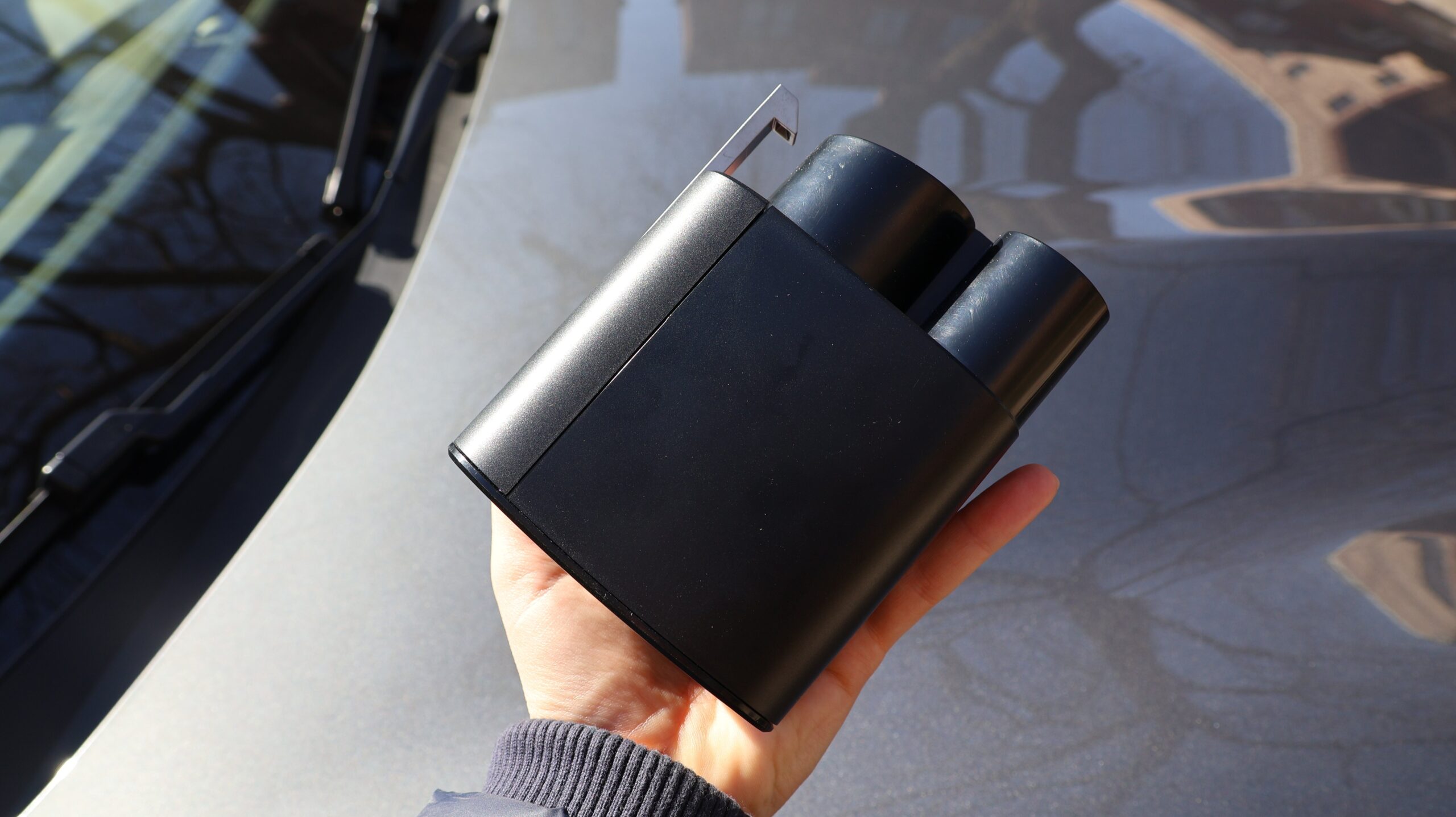
Adapters cost anywhere from $180 for off-market options to around $230 for brand-approved hardware. Kia did not list a price for the adapters, but says they are available at dealers.
Ford adapter to convert charge port from CCS to NACS (Credit: Emily Forlini)
The next brands to get Supercharger access are BMW, Jaguar-Land Rover, Honda, Toyota, Subaru, Volkswagen (VW), Audi, and Porsche, according to the Tesla website. That’s nearly the entire industry, save for Stellantis, Mini Cooper, and Rolls Royce, which have not announced rollout timelines yet.
Keep in mind that this does not cover the entire Supercharger network. Tesla has restricted access, particularly in urban areas or at stations that lack the software or hardware to support other brands. Also, Tesla has said it may inflate charging fees for other brands, though you can get the same rates as Tesla drivers if you sign up for a $12.99/month Supercharger membership.
Still, drivers have access to around 21,500 V3 Superchargers, the best and most powerful type of charger in the network.
Tesla’s Battle for NACS Dominance
Tesla has been working to make its in-house connector the national standard since November 2022, when it published the manufacturing specs for the port, dubbed it the North American Charging Standard (NACS), and invited other automakers to adopt it.
Tesla argued its in-house connector is smaller, easier to handle, and more reliable than the Combined Charging System (CCS), the port currently found on all non-Tesla EVs except the 2025 Ioniq 5. Plus, Superchargers make up around a third of the 60,000 public fast chargers in the US, according to the US Department of Energy.

NACS ports are smaller than CCS. (Credit: Tesla)
No brands immediately jumped at the opportunity to switch to NACS. At CES 2023, Mercedes told PCMag it would “never” adopt NACS, but after Ford took the plunge, Mercedes and all other automakers followed suit to give their drivers more charging options on the road.
The Society of Automotive Engineers is working on certifying Tesla’s NACS port as the national standard under the new name of SAE J3400. Other charging companies—like Blink, ChargePoint, and Electrify America—plan to offer CCS and NACS plug-ins on new stations.
Not So Fast: Adapter Backlogs, Blocking Cars
The move is a major win for Tesla and consumers who won’t need to keep track of charge port types anymore. However, one of the biggest initial issues was the limited supply of adapters, causing months-long delivery delays for the first brands to get access. That issue seems to be resolving, with fewer concerns toward the end of 2024.
Get Our Best Stories!

Your Daily Dose of Our Top Tech News
By clicking Sign Me Up, you confirm you are 16+ and agree to our Terms of Use and Privacy Policy.
Thanks for signing up!
Your subscription has been confirmed. Keep an eye on your inbox!

(Credit: Emily Forlini)
It’s also unclear how much Supercharger access will move the needle on EV adoption. Up to 90% of charging occurs at home, and Superchargers are public. Apartment dwellers and others who cannot charge at home may benefit the most by having more reliable places to power up.
Ford found that its drivers power up at Tesla stations only 20% of the time. Adapter availability, wait times, or charge port placement issues could be to blame. The cables that run from the Supercharger to the car are too short to reach the ports on some non-Tesla vehicles, such as Fords. So, non-Tesla drivers may have to play with the positioning of their vehicles in order to reach the Supercharger cord, blocking other charging spots.
Recommended by Our Editors
Rather than retrofitting the software and hardware at old stations, Tesla is more likely to open up future Superchargers to other brands from the get-go. These are stations Ford refers to as “upgraded” and therefore eligible for non-Teslas.

Attaching the adapter to the tip of the Tesla Supercharger cord. (Credit: Emily Forlini)
List of EVs With Supercharging Access Now
The full list of EV makers that have announced the switch to NACS includes Ford, General Motors, Rivian, Volvo, Polestar, Mercedes, Nissan, Honda, Kia, Hyundai, Genesis, BMW, Mini, Rolls-Royce, Toyota, Lexus, Subaru, Lucid, Volkswagen, Audi, Porsche, and Stellantis, which owns Dodge, Ram, Jeep, Peugeot, Chrysler, Alfa Romeo, and a smattering of other brands.
However, at this time, only Ford, Rivian, General Motors (GM), Polestar, Volvo, Nissan, Lucid, Mercedes-Benz, Hyundai, Genesis, and Kia have access, in addition to the entire Tesla lineup.
Base model pricing and maximum range are shown below.
Tesla

Tesla Lineup (Credit: Tesla)
-
Tesla Model 3 (PCMag Editors’ Choice): $40,240, 272-mile range
-
Tesla Model Y (PCMag Editors’ Choice): $43,990, 279-mile range
-
Cybertruck: $79,990, 340-mile range
-
Tesla Model S: $88,490, 405-mile range
-
Tesla Model X (PCMag Editors’ Choice): $98,490, 348-mile range
Ford

Ford F-150 Lightning (Credit: Emily Forlini)
Rivian

Rivian R1S (Credit: Emily Forlini)
Chevrolet (GM)

Chevy Bolt EUV (Credit: Emily Forlini)
-
Chevrolet Bolt EV: Discontinued, $26,500, 259-mile range
-
Chevrolet Bolt EUV: Discontinued, $27,800, 247-mile range
-
Chevrolet Blazer EV (PCMag Editors’ Choice): $47,600, 283-mile range
-
Chevrolet Equinox EV (PCMag Editors’ Choice): $33,600, 315-mile range
-
Chevrolet Silverado EV: $70,000, 393-mile range
Cadillac (GM)

Cadillac Lyriq (Credit: Cadillac)
-
Cadillac Lyric: $58,595, 314-mile range
-
Cadillac Escalade IQ: $127,700, 450-mile range
-
Cadillac Optiq: $52,895, 302-mile range
-
Cadillac Celestiq: Limited availability starting around mid-$300K, 300-mile range
GMC (GM)

Hummer EV SUV (Credit: GMC)
-
Hummer EV Pickup: $96,550, 311-mile range
-
Hummer EV SUV: $96,550, 303-mile range
Polestar

2024 Polestar 2 (Credit: Polestar)
-
Polestar 2: $48,000, 270-mile range
-
Polestar 3: $84,000, 300-mile range
-
Polestar 4: $54,900, 300-mile range
Volvo

Volvo C40 Recharge (Credit: Emily Forlini)
Nissan

Nissan Ariya (Credit: Nissan)
-
Nissan Ariya: $39,590, 216-mile range (up to 304 miles on top trims). Limited availability.
-
Note: The current Nissan Leaf has a different port type that is not NACS-compatible, but a 2026 Nissan Leaf—which hopefully has a compatible port—is in the works.
Mercedes

Mercedes EQB SUV (Credit: Mercedes)
-
EQB SUV: $53,050, 240-mile range
-
EQE Sedan: $74,900, 305-mile range
-
EQE SUV: $77,900, 279-mile range
-
EQS Sedan: $104,400, 350-mile range
-
EQS SUV: $104,400, 305-mile range
-
EQS SUV Maybach: $179,900, 280-mile range
Lucid

Lucid Air (Credit: Emily Forlini)
Hyundai

(Credit: Hyundai)
Genesis

Genesis GV70 Electrified (Credit: Genesis)
-
Genesis GV60: $52,000, 294-mile range
-
Genesis GV70: $66,450, 236-mile range
-
Genesis GV80: $80,400, 282-mile range
-
Note, Genesis vehicles are only sold at select retailers in AZ, CA, CO, CT, FL, GA, IL, IN, LA, MA, MD, MN, NC, NJ, NV, NY, PA, SC, TX, UT, VA, WA, and WI.
Kia

2024 Kia EV9 (Credit: Emily Forlini)
-
Kia Niro: $39,550, 253-mile range
-
Kia EV6: $48,700, 310-mile range
-
Kia EV9: $54,900, 270-mile range
List of EVs Getting Supercharger Access Next
BMW, Jaguar-Land Rover, Honda, Toyota, Subaru, Volkswagen (VW), Audi, and Porsche will get access next, according to the Tesla website.
Jaguar-Land Rover

2022 Jaguar I-Pace (Credit: Jaguar)
-
Jaguar I-PACE: Discontinued end of 2024, $72,000, 246-mile range.
-
Upcoming Launch: Electric Range Rover
BMW

BMW i4 (Credit: Emily Forlini)
-
i4: $57,900, 256-mile range
-
i5: $67,100, 270-mile range
-
iX: $87,250, 307-mile range
-
i7: $105,700, 318-mile range
Honda

2024 Honda Prologue (Credit: Honda)
Toyota

Toyota bZ4X (Credit: Emily Forlini)
Lexus

Lexus RZ (Credit: Emily Forlini)
Subaru

(Credit: Subaru)
Volkswagen

Volkswagen ID.4 (Credit: Emily Forlini)
-
ID.4: $38,995, 209-275-mile range
-
ID.Buzz: $59,995 240-mile range
Audi

2025 Q6 e-tron quattro prestige (Credit: Audi)
-
Q4 e-Tron: $50,995, 265-mile range
-
SQ8 e-Tron: $89,000, 253-mile range
-
eTron GT: $106,500, 249-mile range
-
Audi Q6 e-Tron: $63,800, 320-mile range
-
Audi SQ6 e-Tron: $72,900, 275-mile range
Porsche

Porsche Taycan (Credit: Emily Forlini)
-
Taycan: $90,900, 208-mile range
-
Porsche Macan Electric: $78,800, 308-mile range
List of EVs Getting Supercharger Access by End of 2025
Tesla will continue opening up its Supercharger network to all other brands this year via an adapter. In 2025, these brands will begin manufacturing vehicles with the NACS port, removing the need for an adapter.
Mini Cooper

Mini Countryman SE ALL4 (Credit: BMW/Mini)
Rolls-Royce

2024 Spectre (Credit: Rolls-Royce)
Jeep

Wagoneer S (Credit: Jeep)
-
Wagoneer S: $65,200, 294-mile range
-
Upcoming Launches: Recon EV
Fiat

Fiat 500e (Credit: Emily Forlini)

 The Fiat 500e Convinced Me Tiny, Low-Range EVs Have a Place in the US
About Emily Forlini
Senior Reporter

Read the latest from Emily Forlini


![[ 8 Pack ] Plastic Storage Baskets With Lids, Small Pantry Organization, Stackable Storage Bins, Household Organizers for Cabinets, Countertop, Drawers, Under Sink or On Shelves,Gray](https://i1.wp.com/m.media-amazon.com/images/I/81NMRFDwXYL._AC_SL1500_.jpg?w=300&resize=300,300&ssl=1)
![[Luxury] Kitchen Soap Dispenser Set – 16OZ Black Glass Bottle, Stainless Steel Pump, Instant Dry Tray, Waterproof Labels, Non-Slip Silicone Pad, and Dish Brush | Upgrade for Your Kitchen and Bathroom](https://i3.wp.com/m.media-amazon.com/images/I/71TQcJWiGtL._AC_SL1500_.jpg?w=300&resize=300,300&ssl=1)