
Check out our latest products
![[K-Beauty] Rose Vitamin Oil to Foam | Daily Face Wash Oil Based Cleanser | Korean Rose Oil Foaming Face Cleanser | Hydrating Facial Cleanser for Dry Sensitive Skin (3.88 oz)](https://i1.wp.com/m.media-amazon.com/images/I/71sX7yIuXRL._SL1500_.jpg?w=300&resize=300,300&ssl=1)


Deeper Dive: Our Top Tested Picks
Best Overall Windows Laptop for Kids
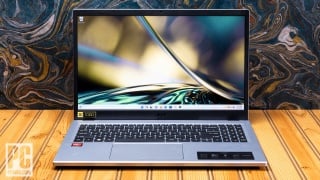
Acer Aspire 3 (A315-24P)
- Smooth everyday operation
- Extensive battery life
- Current Wi-Fi connectivity
- Competitive starting price
- Limited performance headroom
- Dated, somewhat flimsy design
- Lackluster display
- Top configuration is outclassed
The Acer Aspire 3 (A315-24P) undercuts the competition with decent performance in its base configuration. It’s basic as bricks, though, and the higher-end configuration just isn’t as competitive.
Class
Budget
Processor
AMD Ryzen 3 7320U
Processor Speed
2.4 GHz
RAM (as Tested)
8 GB
Boot Drive Type
SSD
Boot Drive Capacity (as Tested)
128 GB
Screen Size
15.6 inches
Native Display Resolution
1920 by 1080
Panel Technology
IPS
Variable Refresh Support
None
Screen Refresh Rate
60 Hz
Graphics Processor
AMD Radeon Graphics
Wireless Networking
802.11ax, Bluetooth 5.2
Dimensions (HWD)
0.75 by 14.3 by 9.4 inches
Weight
3.77 lbs
Operating System
Windows 11 Home
Tested Battery Life (Hours:Minutes)
16:46
Learn More
Acer Aspire 3 (A315-24P) Review

Best Chromebook for Older Kids
Asus Chromebook Plus CX34 (2025)
- Impressive CPU performance
- Pleasant keyboard and touchpad
- Lots of connectivity
- Attractive, friendly design
- A bit of flex to the chassis
- Basic 1080p display easily outclassed for not much more
- Enough battery for a workday—no more
If you’re shopping for an older kid, you have no reason not to get them our favorite all-around Chromebook, the Asus Chromebook Plus CX34 (2025). An updated Intel Core i5 processor makes it a brilliant match for older kids who need to get work done. The keyboard is comfortable to type on, the touchpad is pleasant, and the connectivity is first-rate with Wi-Fi 7 and plenty of ports—all without bringing up the price. Coming complete with a 1080p touch screen, it’s ready for schoolwork or relaxing after homework. And, with more than 10 hours of battery life, the CX34 will easily carry a student through a full day of classes, making this our recommendation as the best Chromebook for older kids.
The Asus Chromebook Plus CX34 (2025) is ideal for older kids and teenagers who need a reliable device for school assignments and online learning. With usability for education and recreation, it’s a smart choice for families looking for a budget-friendly Chromebook with a decent mix of features and performance.
Class
Chromebook
Processor
Intel Core i5-1335U
RAM (as Tested)
8 GB
Boot Drive Type
UFS (Universal Flash Storage)
Boot Drive Capacity (as Tested)
128 GB
Screen Size
14 inches
Native Display Resolution
1920 by 1080
Panel Technology
IPS
Variable Refresh Support
None
Screen Refresh Rate
60 Hz
Graphics Processor
Intel Iris Xe Graphics
Wireless Networking
802.11be, Bluetooth 5.3
Dimensions (HWD)
12.85 x 8.44 x 0.74 inches
Weight
3.17 lbs
Operating System
Chrome OS
Tested Battery Life (Hours:Minutes)
10:51
Learn More
Asus Chromebook Plus CX34 (2025) Review

Best Apple Laptop for Kids
Apple MacBook Air (M1, Late 2020)
- Good value, especially for a MacBook
- Much-improved performance, thanks to Apple’s new M1 processor
- Exceptional battery life
- Sleek, portable metal design
- High-quality keyboard, touchpad, and display
- Multiple color options
- Port selection limited to two USB Type-C connections
- Still no touch-screen option
Now often discounted, the 2020 M1-equipped MacBook Air packs better performance than its predecessors, rivaling at times the M1-based MacBook Pro. It’s a good value for students.
Class
Ultraportable
Processor
Apple M1
RAM (as Tested)
8 GB
Boot Drive Type
SSD
Boot Drive Capacity (as Tested)
256 GB
Screen Size
13.3 inches
Native Display Resolution
2560 by 1600
Panel Technology
IPS
Variable Refresh Support
None
Screen Refresh Rate
60 Hz
Graphics Processor
Apple M1
Wireless Networking
802.11ax, Bluetooth
Dimensions (HWD)
0.63 by 11.97 by 8.36 inches
Weight
2.8 lbs
Operating System
Apple macOS
Tested Battery Life (Hours:Minutes)
29:01
Learn More
Apple MacBook Air (M1, Late 2020) Review

Best 2-in-1 Chromebook for Kids
Lenovo Flex 3 Chromebook
- Responsive 12.2-inch touchscreen
- Low price
- Compact and lightweight
- Decent port selection
- Flexible 2-in-1 design
- Middling Intel N100 processor
- Storage limited to 64GB eMMC
- Lagging battery life
- Plastic construction with unwanted chassis flex
The Lenovo Flex 3 Chromebook is a highly affordable 2-in-1 with a charming design, a responsive touch screen, and a helpful array of ports.
Class
Chromebook, Convertible 2-in-1, Budget, Ultraportable
Processor
Intel N100
RAM (as Tested)
4 GB
Boot Drive Type
eMMC Flash Memory
Boot Drive Capacity (as Tested)
64 GB
Screen Size
12.2 inches
Native Display Resolution
1920 by 1200
Panel Technology
IPS
Variable Refresh Support
None
Screen Refresh Rate
60 Hz
Graphics Processor
Intel UHD Graphics
Wireless Networking
802.11ax (Wi-Fi 6), Bluetooth 5.1
Dimensions (HWD)
0.72 by 11.18 by 8.27 inches
Weight
2.76 lbs
Operating System
Chrome OS
Tested Battery Life (Hours:Minutes)
8:38
Learn More
Lenovo Flex 3 Chromebook Review

Best Convertible 2-in-1 Windows Laptop for Kids
Lenovo IdeaPad Flex 5i 14 (2023)
- Strong application performance
- Right-size screen for 2-in-1 versatility
- Crisp, accurate 1080p webcam
- Varied and useful port selection
- Long runtime
- No CPU or screen upgrades
- Display’s color coverage is lacking
- Gray keys clash with deep blue chassis
Lenovo’s IdeaPad Flex 5i 14 provides enough performance and build quality to deliver strong value for shoppers seeking a budget convertible.
Class
Convertible 2-in-1
Processor
Intel Core i5-1335U
Processor Speed
1.3 GHz
RAM (as Tested)
16 GB
Boot Drive Type
SSD
Boot Drive Capacity (as Tested)
512 GB
Screen Size
14 inches
Native Display Resolution
1920 by 1200
Panel Technology
IPS
Variable Refresh Support
None
Screen Refresh Rate
60 Hz
Graphics Processor
Intel Iris Xe
Wireless Networking
802.11ax, Bluetooth 5.2
Dimensions (HWD)
0.78 by 12.3 by 8.9 inches
Weight
3.5 lbs
Operating System
Windows 11 Home
Tested Battery Life (Hours:Minutes)
13:32
Learn More
Lenovo IdeaPad Flex 5i 14 (2023) Review

Best Detachable 2-in-1 Chromebook for Kids
Lenovo Chromebook Duet Gen 9
- Among the least expensive convertible laptops on the market
- Sharp touch screen
- Tablet portion has a high-quality build for its price
- Headphone jack is back
- Test model includes stylus pen
- All models include bundled keyboard
- Middling performance and battery life
- Keyboard has squishy keys, is designed for smaller hands
If you want a 2-in-1 bargain, the Lenovo Chromebook Duet Gen 9 is the one to grab. From the compact design and included accessories to the affordable $359 price, this tablet Chromebook is ideal for kids, young and old, with a versatile design, touch-screen support for Android apps and games, and a comfortable (if slightly cramped) typing experience. The sturdy metal chassis should survive rough handling, and the included pen lets kids write and draw in addition to tapping and typing. It’s our favorite detachable, even if Mom and Dad want to use it, too.
With its compact design and affordable price, the Lenovo Chromebook Duet Gen 9 is tailored for children and students needing a school and play device. While the tablet and laptop functions are perfect for educational tasks, the device is also suitable for fun and games, with a touch screen and Android app support.
Class
Chromebook, Detachable 2-in-1
Processor
MediaTek Kompanio 838
RAM (as Tested)
8 GB
Boot Drive Type
eMMC Flash Memory
Boot Drive Capacity (as Tested)
128 GB
Screen Size
10.95 inches
Native Display Resolution
1920 by 1200
Panel Technology
IPS
Variable Refresh Support
None
Screen Refresh Rate
60 Hz
Graphics Processor
ARM Mali-G57 MC3
Wireless Networking
802.11ax (Wi-Fi 6), Bluetooth
Dimensions (HWD)
0.30 by 10.1 by 6.6 inches
Weight
1.12 lbs
Operating System
Google ChromeOS
Tested Battery Life (Hours:Minutes)
6:01
Learn More
Lenovo Chromebook Duet Gen 9 Review

Best Gaming Laptop for Kids
Acer Nitro V 15 (ANV15-51-59MT)
- Attractive price
- Suffices for 1080p gaming
- Wide selection of ports
- Lengthy battery life
- Lagging processor performance
- Limited 512GB SSD
The Acer Nitro V 15 won’t top any charts, but it’s a fine value in a budget gaming laptop, driving more-than-60fps performance for well under $1,000 while dodging any major design potholes.
Class
Gaming
Processor
Intel Core i5-13420H
RAM (as Tested)
8 GB
Boot Drive Type
SSD
Boot Drive Capacity (as Tested)
512 GB
Screen Size
15.6 inches
Native Display Resolution
1920 by 1080
Panel Technology
IPS
Variable Refresh Support
None
Screen Refresh Rate
144 Hz
Graphics Processor
Nvidia GeForce RTX 4050 Laptop GPU
Graphics Memory
6 GB
Wireless Networking
802.11ax (Wi-Fi 6), Bluetooth
Dimensions (HWD)
1.06 by 14.3 by 9.4 inches
Weight
4.66 lbs
Operating System
Windows 11
Tested Battery Life (Hours:Minutes)
9:51
Learn More
Acer Nitro V 15 (ANV15-51-59MT) Review

Best Gaming Chromebook for Kids
Acer Chromebook Plus 516 GE (2025)
- Boosted productivity and gaming performance
- High-res IPS screen with 120Hz refresh rate
- Four-zone RGB keyboard with anti-ghosting
- Wi-Fi 6E and Ethernet
- Below-average battery life
- Non-touch display limits Android app use
If you’re looking for an exceptional gaming experience for kids, the Acer Chromebook Plus 516 GE (2025) stands out as the best. This latest iteration of Acer’s gaming-focused Chromebook delivers impressive performance with its upgraded CPU, a vibrant 120Hz refresh rate IPS display, and a customizable four-zone RGB keyboard featuring anti-ghosting technology for a high-fidelity experience. It’s tailor-made for game streaming and schoolwork with advanced connectivity options like Wi-Fi 6E and Ethernet. As a Chromebook Plus, it also features AI enhancements that elevate it above older models. Best of all, it’s priced at just $649.
Whether you’re a parent seeking an affordable gaming solution for your child or a young gamer looking for a Chromebook that can access the latest high-end games for less, the Acer Chromebook Plus 516 GE (2025) caters to both needs. This makes it an ideal choice for kids who want to play without busing their parents’ budgets.
Class
Chromebook, Gaming
Processor
Intel Core i5-120U
RAM (as Tested)
8 GB
Boot Drive Type
SSD
Boot Drive Capacity (as Tested)
256 GB
Screen Size
16 inches
Native Display Resolution
2560 by 1600
Panel Technology
IPS
Variable Refresh Support
Yes
Screen Refresh Rate
120 Hz
Graphics Processor
Intel Graphics
Wireless Networking
Wi-Fi 6E, Bluetooth 5.2
Dimensions (HWD)
0.84 by 14.0 by 9.8 inches
Weight
3.75 lbs
Operating System
Chrome OS
Tested Battery Life (Hours:Minutes)
9:16
Learn More
Acer Chromebook Plus 516 GE (2025) Review
The Best Laptops for Kids in 2025
Compare Specs
Buying Guide: The Best Laptops for Kids in 2025
First and foremost, as a preface to our advice: Our focus here is on younger kids. If your child is at the university level, check out our roundup of the best laptops for college students. You’ll find even more choices in our overall roundup of the best budget laptops. Also, check our top picks for the best Chromebooks for kids for more on ChromeOS concerns and education aspects, especially for the lower grades.
If your child is also of the age that they may be looking to play PC games on the same machine they’ll use for schoolwork, that is a whole other set of considerations. We’ll address that in a section near the end of this article but know that gaming machines cost more than our other picks here.
Which Operating System Is Best in a Kid PC?
Before you begin to evaluate features, you’ll start with the essential question that has plagued PC shoppers for decades: Which operating system should I choose?
Most parents will choose between Microsoft’s Windows and Google’s ChromeOS. In addition to running web apps within the Chrome browser, ChromeOS can run apps from the Google Play store designed for Android smartphones and tablets, including Microsoft Office. If you’ve decided against buying a smartphone for your kids but they talk your ear off about wanting to play mobile games, buying a Chromebook might be a good compromise.
Apple fans aren’t limited solely to expensive premium laptops anymore, so macOS is also a viable choice. Thanks to a partnership between Apple and retailers like Walmart and Best Buy, the 2020 MacBook Air is more affordable than ever, so you can set your older kids up with a new MacBook (with older hardware) instead of using Apple hand-me-downs.

(Credit: Kyle Cobian)
Windows 10 and Windows 11 have also become more useful for kid-oriented laptops, thanks to S Mode, which is aimed at the education market and, among other security enhancements, prevents apps from being installed unless they’re available on the Microsoft Store. This means you can block games and apps based on their content ratings (something you can also do with Google Play apps). When your son or daughter gets older and more responsible, you can easily upgrade to the full version of Windows to remove these limitations.

(Credit: Joseph Maldonado)
If your child’s school has specific software that runs only on Windows, your operating system choice will be decided for you. If not, you’ll want to look closely at ChromeOS since a few Chromebooks include decidedly kid-friendly features (such as easy-grip coatings or display lids that double as whiteboards). Again, check out our Chromebooks-for-kids guide and best Chromebooks for gaming for more on the specifics around this OS.
Features like these transform an ordinary cheap laptop into a school-friendly machine that kids won’t outgrow or wreck in a few months. Arguably the most important, though, is how rugged the case is.
Built for Backpacks: Rugged Laptops for Kids
A few Chromebooks and inexpensive Windows laptops have spill-resistant keyboards, meaning they should survive splashing with an ounce or so of water unscathed. It’s much rarer to find entire laptops that are waterproof; the rugged ones that are (models like Panasonic’s Toughbook line or Dell’s Latitude Rugged Extremes) typically cost several thousand dollars and aren’t geared toward kids at all, but rather workers in emergency-services, outdoorsy, or shop-floor professions. Likewise, it’s relatively easy to find reinforced lids or cases bolstered with rubber to help absorb drops from a few feet, but you won’t see fully ruggedized machines anywhere close to this price range.

(Credit: Joseph Maldonado)
Portability is another critical concern, especially for middle- and high-schoolers who walk to school with backpacks laden with heavy textbooks. Most laptops in this category with screen sizes from 11 to 13 inches weigh about 2.5 pounds. Go above 3 pounds, and you’re putting a real burden on your child’s shoulders.
Battery life is important, too, but it’s no longer the limiting factor that rendered the laptops of a decade ago useless if they spent more than a few hours away from a power outlet. Even some of the cheapest laptops now deliver times of about 10 hours on PCMag’s battery rundown test, thanks (mostly) to power-sipping Intel processors.
What Specs Should My Child’s Laptop Have?
The final consideration is how your kids will use the laptop, which in turn determines the processor, storage, and memory configurations you should select. Tasks such as taking notes, writing papers, or making PowerPoint slides require little more than the bare minimum, which means that an Intel Celeron or Pentium processor will suffice; a few budget Chromebook models use AMD or MediaTek mobile processors. These collectively are the lowest performance tier in budget laptops. (The exception to that: AMD’s Ryzen C series chips, much peppier AMD processors that are purpose-built for Chromebooks.)
The next step up is an Intel Core i3 (or, more recently, Core 3), which you should consider if your kid’s teachers regularly have them stream online educational videos. An Intel Core i5 or i7 (again, possibly Core 5 or Core 7) or an Apple M-series chip is best, but they’re all but impossible to find on a laptop or Chromebook that costs about $300.

(Credit: Molly Flores)
Expect to see these Intel Core “i” designations start to be replaced with the Intel Core Ultra 5 and Core Ultra 7 naming convention now in its second and third generation (known as “Lunar Lake” 200V or “Arrow Lake” 200H, HX, and U). These new-generation chips have new neural processing units (NPUs) in their core clusters. (The NPUs crunch on AI tasks exclusively and will see more use in the coming months and years; they are not a factor in a kid’s PC right now.) AMD has a similar AI-driven growth path in its mobile processors—also in its second generation of such chips. These are known formally as the Ryzen AI 300 series, or by the “Strix Point” codename. For most kid-oriented PCs, though, you can safely opt for an older chip: an Intel “Core i” model, or an earlier AMD Ryzen processor from the Ryzen 7000 or 8000 series.
If a big part of getting a new laptop is so that your kid can stream videos, consider a 2-in-1 convertible or detachable laptop. These can double as a tablet thanks to a hinge that rotates 360 degrees, or a screen that detaches entirely from the keyboard base. Most hybrids and convertibles are more expensive than the price range we’ve discussed, but you can find a few high-quality models for less than $500, especially in the Chromebook crowd. These are best for middle-school-age children or older since these machines are naturally less durable than a conventional laptop.

(Credit: Joseph Maldonado)
A typical minimal configuration for memory and storage is 4GB of RAM and 64GB of flash memory. The former (memory) amount is adequate in a budget Chromebook but not for a Windows machine; 8GB is the best baseline for anything running Windows, and 16GB is better. Consider bumping up the storage capacity to at least 128GB for a Windows system, since the operating system files on a Windows PC can take up more than 20GB, leaving your kid with a paltry 40GB or so of built-in storage on a 64GB drive. Really, 256GB should be the minimum for a Windows machine unless it’s truly bare-budget cheap, and 512GB for a gaming model.
The exception is if you choose a now-rare laptop that has a roomier but slower (and more easily breakable) spinning hard drive or one with a built-in SD card reader. (Hard drives have disappeared from Chromebooks and from all budget laptops, barring older models.) In the latter case, you could stick with the base configuration and ask your kids to store their bulkier files on SD cards if needed, which you can buy in 32GB capacities for about $20 each. But really, getting what you need from the start as internal storage is a much better idea.
Time for Fun: What About Graphics and Games?
Just because you’re selecting from relatively slow processors and limited memory capacities doesn’t mean gaming is out of the question when your kid is done with their schoolwork. Some games are, of course, even educational. For instance, Microsoft has an educational version of its immensely popular open-world construction game Minecraft. Students can use it to explore real-world history like the Oregon Trail, solve math problems as they understand how long and challenging the trail was, and research fur-trading companies to learn about the economic concepts of monopolies and supply and demand.

(Credit: Joseph Maldonado)
Minecraft and similar games will run on Core i3 systems with as little as 4GB of RAM—it’ll even run on some Chromebooks—but if your kid is looking forward to playing them, you’ll make the experience much more enjoyable by selecting a laptop with 8GB. And new to the laptop market: gaming Chromebooks, which are built to take advantage of Android games and cloud gaming services.
If your child plans to do more intense gaming, you’ll need to increase the power and the price to a full-fledged gaming laptop (or maybe a desktop). Gaming laptops employ a dedicated graphics chip, dubbed GeForce RTX or Radeon RX.
You won’t find current-generation gaming laptops for less than $700.That’s the on-ramp for machines with game-worthy GeForce RTX or (less common) Radeon RX dedicated graphics chips, and prices rise rapidly from there as you add features and power. Most kids will be satisfied with a budget model under $1,000, however. (See our guide to budget gaming machines.)
Ready to Buy the Right Laptop for Your Kid?
Giving your son or daughter a laptop endows them with a portal into the mighty internet, even if the laptop itself may not be the most potent you can buy. It’s up to you (and your kids’ teachers) to ensure that tool isn’t harmful. Fortunately, all three major OS makers have parental control features, and a laptop’s size relative to a smartphone makes it easier to monitor activity and set ground rules like disallowing computer use after homework is finished.
We trust our advice has armed you with the rudiments you need to buy with confidence, and we continually update this roundup with the latest models. You can also check out our roundups of our favorite tablets for kids and our top phones for kids.


![[ 8 Pack ] Plastic Storage Baskets With Lids, Small Pantry Organization, Stackable Storage Bins, Household Organizers for Cabinets, Countertop, Drawers, Under Sink or On Shelves,Gray](https://i1.wp.com/m.media-amazon.com/images/I/81NMRFDwXYL._AC_SL1500_.jpg?w=300&resize=300,300&ssl=1)
![[Luxury] Kitchen Soap Dispenser Set – 16OZ Black Glass Bottle, Stainless Steel Pump, Instant Dry Tray, Waterproof Labels, Non-Slip Silicone Pad, and Dish Brush | Upgrade for Your Kitchen and Bathroom](https://i3.wp.com/m.media-amazon.com/images/I/71TQcJWiGtL._AC_SL1500_.jpg?w=300&resize=300,300&ssl=1)